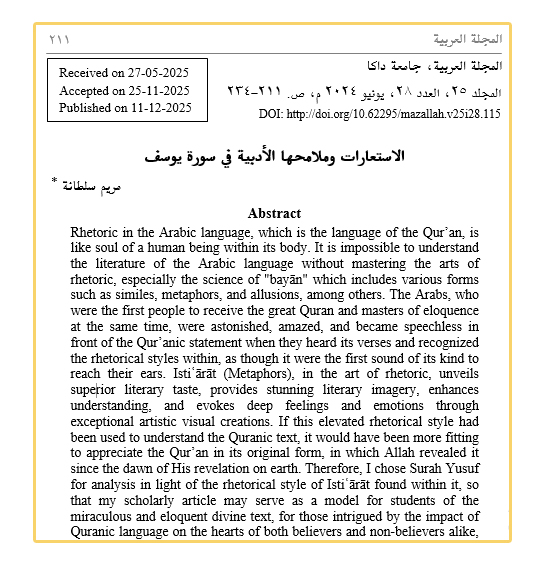
الاستعارات وملامحها الأدبية في سورة يوسف
DOI:
https://doi.org/10.62295/mazallah.v25i28.115Keywords:
The eloquence, Istiʿārāt (Metaphor), Surah Yusuf, Literature, Visual imagery.Abstract
Rhetoric in the Arabic language, which is the language of the Qur’an, is like soul of a human being within its body. It is impossible to understand the literature of the Arabic language without mastering the arts of rhetoric, especially the science of "bayān" which includes various forms such as similes, metaphors, and allusions, among others. The Arabs, who were the first people to receive the great Quran and masters of eloquence at the same time, were astonished, amazed, and became speechless in front of the Qur’anic statement when they heard its verses and recognized the rhetorical styles within, as though it were the first sound of its kind to reach their ears. Istiʿārāt (Metaphors), in the art of rhetoric, unveils superior literary taste, provides stunning literary imagery, enhances understanding, and evokes deep feelings and emotions through exceptional artistic visual creations. If this elevated rhetorical style had been used to understand the Quranic text, it would have been more fitting to appreciate the Qur’an in its original form, in which Allah revealed it since the dawn of His revelation on earth. Therefore, I chose Surah Yusuf for analysis in light of the rhetorical style of Istiʿārāt found within it, so that my scholarly article may serve as a model for students of the miraculous and eloquent divine text, for those intrigued by the impact of Quranic language on the hearts of both believers and non-believers alike, and for those who immerse themselves in the depths of human stories to compare them with the finest stories from Allah. Surah Yusuf stands as a profound example. I believe that analyzing the Istiʿārāt in Surah Yusuf along with their literary features benefits seekers of knowledge and those interested in rhetorical interpretation of the Qur’an, helping them understand the rhetorical images in various surahs of the Qur’an.
References
القرآن الكريم
ابن عاشور ، محمد طاهر. (١٨٨٤م ). التحرير والتنوير . تونس: دار الونسية.
ابن منظور، محمد بن مكرم بن على أبو الفضل جمال الدين. ( ١٤١٤هـ). لسان العرب. (ج ٤).بيروت، لبنان: دار صادر.
الجرجاني، الإمام عبد القاهر.( ١٤٠٩هـ). أسرار البلاغة في علم البيان. بيروت، لبنان: دار الكتب العلمية.
الجارم، علي بن صالح، أمين، مصطفى. (١٤٣٩هـ). البلاغة الواضحة ودليلها في ثوبها الجديد.(ج١). بيروت، لبنان: دار ابن كثير.
الخالدي، الدكتور صلاح عبد الفتاح. (١٤٣٧هـ). نظرية التصوير الفني عند سيد قطب. عمان، أردن : دار الفاروقل.
الزمخشري، أبو القاسم جار الله محمود بن عمر بن أحمد. ( ۱۴۱٨هـ). الكشاف عن حقائق غوامض التنزيل وعيون الأقاويل في وجوه التأويل. د. م. : مكتبة العبيكان.
الصابوني، محمد علي. (د.ت.). صفوة التفاسير . (ج٢). القاهرة، مصر: دار الحديث.
الهاشمي بك، السيد أحمد. (١٤٣٤هـ). جواهر البلاغة. (ج١). القاهرة، مصر: دار الحديث.
عتيق، د. عبد العزيز. (١٤٥٠هـ). علم البيان. (ج٢). بيروت، لبنان: دار النهضة العربية.
عمر، الدكتور أحمد مختار عبد الحميد .(١٤٢٩هـ) . معجم اللغة العربية المعاصرة . (ج ٢). (د. م.): عالم الكتب.
عوني، حامد. (١٩٧٤م). المنهاج الواضح للبلاغة. (ج١). د. م: مكتبة الجامعة الأزهرية للتراث.
قاسم، الدكتور محمد أحمد و ديب، الدكتور محيي الدين. (٢٠٠٣م). علوم البلاغة البديع والبيان والمعاني. طرابلس، لبنان: المؤسسة الحديثة للكتاب.
قطب،سيد. ( ١٩٧٢م). في ظلال القرآن. بيروت، لبنان: دار الشروق.
قطب،سيد.( ٢٠٠٤م. ). التصوير الفني في القرآن. بيروت، لبنان: دار الشروق.
مجموعة من المؤلفين.( ١٩٧٢م.). المعجم الوسيط. (ج ٢). إستانبول: دار الدعوة، بيروت: ودار الفكر .
مجمع القرآن الكريم بالشارقة.( ۲۰۲۴م.) . موسوعة التفسير البلاغي للقرآن. (ج۱٦) الشارقة، دولة الإمارات العربية المتحدة : منشورات القاسمي.
نور الدين دحماني.(۲۰۱۵م.). الوظيفة الجمالية للصورة الفنية في ضوء الفهم التراثي للاستعارة. مجلة الأثر (22)، ص 15، 16
نوفل، د. أحمد، (١٩٨٩م.)، سورة يوسف دراسة تحليلية. عمان، أردن: دار الفرقان.